From Fabric Swatch to Completed Room: Selecting Coordinated Sofa Covers and Bedding
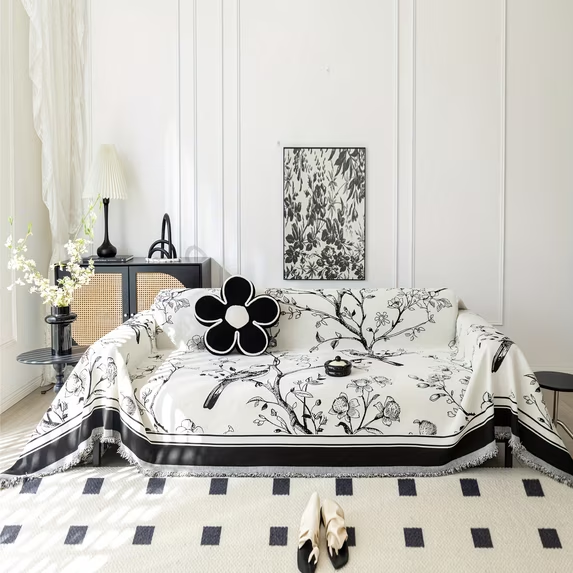
A small fabric sample might feel smooth and appear refined, yet still prove unsuitable for the product you intend to make. When that material is fitted across a sofa, made into a cover or stitched into bedding, it may behave quite differently. Its weight determines much of its drape, the visible surface changes with the lighting, and its construction plays a role in how easily it can be cared for.
Deciding on a sofa cover, sofa panel or bed cover consequently goes beyond selecting an attractive colour. The more practical question concerns how the finished furnishing should perform during normal daily use. A room that accommodates regular family gatherings places different demands on furnishings compared with a bedroom intended primarily for occasional guests.
Considering these familiar everyday circumstances helps you assess holland velvet, mosha velvet, quilting and embroidery more effectively without making decisions on appearance alone. This approach also helps prevent small decisions made during sampling from causing expensive difficulties when the final products arrive.
Begin with What Happens in the Room
Before examining different materials, establish the intended use of each furnishing. A sofa occupied for an hour of evening reading faces different demands from one that remains occupied throughout the day. Regular movement, pets, food and exposure to direct sunlight each influence what should receive attention when choosing a material.
When choosing a sofa cover, determine whether it is intended mainly to protect the furniture, a visual refresh or an easily removed layer used occasionally. These purposes can exist together, but one usually carries the greatest importance. A cover intended for protection requires reliable coverage and secure placement, whereas an occasional decorative covering may prioritise graceful draping.
When assessing bedding, separate the finished appearance of the bed from the comfort someone needs during sleep. A bed cover may serve chiefly to create a neat-looking surface, whereas a comforter usually contributes insulation. Identifying the role that matters most can prevent unwanted bulk and overly complicated layers.
Put these expectations into specific, everyday words. The description “easy to remove and dry” is more informative than the vague phrase “premium quality” because it refers to a characteristic that can actually be tested.
Assess More Than Colour When Examining Fabric Samples
A compact fabric sample provides an impression of its surface texture, yet it cannot represent every aspect of the final product. Examine it standing up, lying flat and draped over a rounded shape. These straightforward movements can show whether the fabric drapes gently, retains its shape or gathers into heavy folds.
Look carefully at the visible surface and the underside. Its reverse construction can affect structural stability, overall thickness and ease of stitching. A pleasant-feeling fabric face does not guarantee compatibility with all sewing methods, especially where several layers overlap at the edges and corners.
When considering holland velvet, examine the particular material being supplied without assuming the product name establishes fixed material characteristics. The fibre content, reverse construction, pile behaviour and finish can vary from one product to another. The same principle should guide your evaluation of mosha velvet, using both its stated specifications and the supplied sample.
Review the materials in the lighting where the finished furnishings will be placed. Natural light from windows and artificial evening lighting may expose different undertones. A neutral colour that looks warm on a sample board may seem distinctly cooler beside the existing flooring or furniture.
Include Fabric Direction in Your Design Planning
Velvet surfaces can display different light and dark effects when seen from different angles. The variation is often most apparent where separate fabric sections sit alongside one another, where inconsistent cutting directions can produce an unintended patchwork effect even if every section comes from the same fabric roll.
When designing a sofa panel arrangement, decide on the intended pile direction before cutting. The direction of every exposed section should be selected deliberately. If different pile directions are intentionally being used as a design feature, the approved sample should make that decision clearly visible.
This approach is equally important for removable cushions and individual covers. Fabric components that seem identical in a horizontal position can look different when placed upright against a sofa backrest or positioned horizontally across the seating area.
Test the material using the kinds of handling it will encounter. Light pressure or gentle brushing can temporarily alter how a pile surface looks. Ask about normal surface changes and the correct way to care for the fabric. Understanding these visual variations realistically allows you to identify the difference between natural surface effects and inconsistent production.
Choose Sofa Cover Fit Based on Dimensions and Everyday Movement
A sofa is not an entirely fixed, unchanging structure. Seat cushions give way, people move while seated and the arms alter the path of the material. Relying solely on total width and height measurements can consequently overlook important fitting difficulties.
Measure and record seat depth, back height, armrest shape and cushion configuration. Establish whether the cushions are attached or removable, together with any moving parts built into the sofa. Any moving components must remain able to operate normally under the cover without the material becoming taut around the joins.
Think carefully about where any spare material will sit. A shortage of fabric allowance may pull tightly around the edges, whereas too much material might bunch together or shift towards the front edge. Measurement requirements change when producing a tailored covering compared with a relaxed throw-style covering.
If practical, arrange a sample fit before final approval, and sit and stand several times afterwards. Check if the cover moves, leaves the seating exposed or develops raised folds that feel uncomfortable. This hands-on check can expose practical shortcomings that might remain hidden in a carefully styled photograph.
The ease of removing the cover is also important. A smart-looking cover that takes considerable time and effort to refit can become inconvenient if it needs frequent washing or cleaning.
Consider Quilting as a Structural Feature as Well as a Design
The quilting process secures layers of material together through stitched lines, forming a textile surface that may offer added body, surface detail and a recognisable visual pattern. The final effect is influenced by the face material, internal filling, reverse layer, stitch design and construction quality.
A fine, regularly repeated stitching pattern can create a different feel from broader stitch spacing. The look of the quilting cannot independently demonstrate softness, warmth or durability. Assess the full layered construction rather than only its visible surface since the same design can behave differently when another backing or filling is used.
For a sofa cover, check whether the quilted material curves comfortably around the arms and seat edges. Too much thickness may make fitting difficult, especially when the material needs to tuck into tight spaces.
For bedroom textiles, assess the relationship between softness of movement and shape retention. The bed cover needs to mosha velvet fall correctly along the sides of the mattress without becoming cumbersome to fold or put away.
Inspect the underside just as thoroughly as the visible face. Inconsistent tension, free threads and gathered fabric around the stitches might reveal construction problems that become increasingly visible over a large area. The appeal of a stitching pattern matters only when it is supported by reliable, consistent construction.
Look at the Practical Results of Multi Needle Stitching
With multi needle production, repeated stitch designs can be made across several fabric layers. Its practical benefits rely on how effectively the machinery settings, textile layers and chosen design work together. The manufacturing technique alone cannot confirm the standard of the completed product.
As you review a sample, determine whether the recurring design remains correctly spaced and aligned. Watch for missed stitches, uneven thread tension and places where the textile layers have moved. Such visible details offer a more dependable basis for evaluation than concentrating only on the description of the manufacturing equipment.
The position of a pattern remains important once the fabric is cut. A stitch design that looks proportionate across a wide, uncut fabric length could look unbalanced on a narrow sofa panel or along the border of a bed cover. For this reason, the cutting arrangement needs to account for the exposed pattern repetition.
With larger orders, base approval on a finished sample that represents the intended item rather than relying solely on a stitched swatch that has not been cut. The representative piece needs to incorporate the specified edging and stitched joins, as these details may contribute additional thickness or influence the final measurements.
Position Embroidery with Comfort and Appearance in Mind
Embroidery introduces decorative detail through stitched thread, and the choice of placement can change both its visual effect and practical comfort. A stitched motif on a cushion face is subjected to different pressures compared with an embroidered area that supports someone sitting on a sofa.
Evaluate how dense and textured the embroidery design is. Thickly embroidered sections can create firm areas where they touch a person. With furniture intended for daily seating, choosing a less prominent location outside the usual contact zone might preserve the decorative effect without unnecessarily affecting seating comfort.
Examine nearby fabric carefully to identify any distortion caused by the embroidery. Heavy stitch concentration can cause lighter materials to contract around the design when the base and supporting materials are not appropriately matched. For raised-pile textiles, the stitching needs sufficient visual clarity so that the pattern can still be distinguished from the background.
Inspect the reverse side and any lining placed between the embroidery and the user. Unsecured thread ends and coarse or uneven sections should be addressed before approval.
Matching furnishings can create a unified appearance without embroidery on each individual piece. Using the same motif selectively across a few items may establish a sense of coordination without removing the calm effect of undecorated surfaces.
Consider Bedding Style and Sleeping Comfort Independently
Both a bed cover and a comforter may contribute to the overall appearance of a made bed, yet they need to be assessed on the basis of their individual roles. Because product names are not always applied consistently, verify the construction itself instead of depending on the product label.
When choosing a decorative upper layer, consider dimensions, how it hangs and how much of the mattress it covers. A mattress with greater depth or a desire for extended side coverage can significantly affect which dimensions will be suitable.
When assessing a comforter, examine its filling specification, overall design and maintenance instructions. Insulating performance is affected by more than one factor, including the filling and its loft; simply comparing product weights is not a dependable way to judge different comforters.
Consider the practical needs of whoever makes and sleeps in the bed. A substantial arrangement of bedding layers can create a full appearance but prove troublesome to rearrange, clean or store. Several additional layers can become unnecessary when they are taken off the bed every evening.
Put together an arrangement that works with everyday bedroom habits. The most practical combination continues to offer comfort and ease of handling after the first carefully styled presentation.
Check Cleaning and Maintenance Needs Before Making a Final Choice
The expected cleaning routine should be considered before making a purchase. Review the care directions supplied for the complete finished item, since the face material, internal layers, stitched decoration and finishing details can have different care needs compared with an untreated piece of fabric.
Where the stated care guidance allows, test a suitable sample using the proposed cleaning process with the same procedure planned for regular care. Then examine any differences in measurements, shade, surface feel and stitched construction. Even modest changes occurring in more than one direction might noticeably change the fitting of a made-to-measure sofa cover.
Pay equal attention to how the furnishing will be dried. Large, multi-layered textiles may be awkward to manage where space is restricted, and some furnishings may be too large for the available household washing machine. Account for these limitations before selecting particularly bulky bedding.
A fabric protection finish should not be taken as evidence of resistance to every stain or cleaning substance. Its suitability depends on the particular treatment and the substance involved.
Keep the confirmed maintenance information with the furnishing's specification. That information can guide later maintenance decisions and reduces the risk of accidental damage resulting from assumptions.
Approve the Whole Piece Before Repeating It
For orders containing several coordinated pieces, bring every specification together in one finished example. The chosen shade, direction of the pile, measurements, motif placement and edging should be checked together as parts of the complete article rather than being approved individually without checking how they work together.
Position the sample in its intended room and examine it from normal viewing angles. Sit on the sofa with its cover fitted, fold the bedding and examine the corners. Ordinary actions of this kind often uncover more than spending a long time studying a flat piece of fabric.
Document the approved specifications clearly, including measurements and agreed tolerances. If possible, preserve a sample for later comparison, most notably when later orders must remain consistent with the initial furnishings.
The final assessment is also an opportunity to remove unnecessary complexity. Reducing excess thickness or limiting decorative details might enhance usability without reducing the visual quality of the finished piece.
Conclusion
Creating practical, attractive furnishings requires a clear picture of how each piece should function. Assess a sofa cover according to how securely it fits and responds to everyday activity, assess velvet by inspecting the specific fabric being supplied, and consider quilting and embroidery as elements of the complete product construction. With bedroom textiles, consider style alongside sleep comfort and realistic maintenance needs. Together, these choices help transform an appealing fabric selection into a completed furnishing that remains suitable after the room has been used regularly.